
Full Episodes

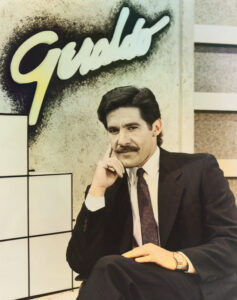
Geraldo 1990s

The Geraldo Show. Uncut, unedited, exactly as they aired — some of the most-watched television programs in
history, presented in full. This shelf collects the complete episodes, from the investigations to
the talk-show landmarks, with nothing trimmed for time or context. The unique cultural experience accumulated in these episodes is offered to the public courtesy of Geraldo Rivera.

Jerri Sousa had three children before she decided to transition to a man.  What caused the regret?  Jerri explains her childhood and feeling alienated from her female sex.  So the fantasy started and eventually, she took concrete medical steps to make the change.  Many do this looking for a 'cure'.  One of her daughters is on stage and speaks to the change, their feelings about it, being raised and signs in their environment.  

Brian lived 14 years as a woman after his surgeries,  He talks about the implants he used to have, silicone injections, taking hormones for 15 years.  Now after almost two decades he's having it all removed in surgery that amounts to a mastectomy.  Confronted with a picture of his time as a woman, he says that was me, at the time.  Life is a process.

Dr. Jayne Thomas, a transsexual psychologist is in studio and says that studies show 9 out of 10 who go for the surgery would do it again.  Dr. Jayne used to be a man but made the transition hersself.  She would do it again every day, and it's not enough for people to accept you, you have to accept yourself.

Kate Bornstein is put on the spot, if you've like women why did you become a woman?  Identified as a lesbian transsexual, she says she had her gender identity and sexual orientation totally confused because what society was telling her was all wrong.  Kate lays out in detail the differences between orientation and identity in a succinct way.

Jerri says god has forgiven her, but the scars remain.  You can never undo what you've done but god gives me strength.  Clearly emotional the segment heads for a break.

Richard Friend PhD, a psychotherapist for transsexuals talks about the ethical stance of psychotherapists.  He emphasizes one must live as the other sex for some time, sort of an unwritten lawn, before the therapist advised medical procedures.  Even though you can go over the border and get an operation in a weekend.  The role of the therapist is to help the patient, not stop them.

Dr. Jayne emphasizes this is a personal journey. It's so good that Jerri has found what's right for him, even if the journey was long.  An audience member confronts and says how can you change what god made you?  She describes going on the gurney to the operating room, and the memories and specifics of her journey.

Audience questions range from recommending to ask god for forgiveness, to wondering where tdo they get their parts?  They come from your own body, actually the tissue that creates clitoris is the same that creates the penis.

Brian closes the show telling the world about his depression when he decided to get the surgery.  To anyone considering this, take your time.

This day, Geraldo's Television History. 1989. Transsexuals talk about their regrets years after going through with it, episode

1989. Transsexuals talk about their regrets years after going through with it, episode

Geraldo Rivera September 4, 2026 1:00 pm

Four women with the same problem, their teen boys all want to be girls.  A full episode of The Geraldo Show dated July 28th, 1995.

"I consider myself a girl.  I always wanted to be a girl..."

On stage we first meet the adults then the teens Stephanie, Angie, Lisa and Carlisa.  These former sons and nephews discuss why they want to change their sex, what in their lives led to now.  As the first segment draws to a close celebrity transsexual Jahna Steele comes in bearing gifts from Hawaii.

Coming back Jahna is asked, after the sex change operation has she has she actually had sex with a man?  Another audience member wonders if the father figures were present.  Back on stage Nikki is introduced to the panel, along with boyfriend Mike. Nikki has been identifying as a woman and might proceed with the operation.  An aunt of one of the boys closes the segment saying she should be able to do whatever she wants.

"Is this you're image of American women?  Because I don't see American women looking the way you look..."

In the midst of audience questions an emotive women gets up and defends the panel, Arielle Sinclair an entertainer from Rhode Island.  They need support more than anything else.  

Some don't understand how a male identifying as female dating a male isn't just a homosexual relationship.  The conversation continues to simmer as we hear tales of discrimination and woe which influenced the decisions for a new sexual identity.

Jahna Steele talks about her childhood, that boy she was is dead and gone, it's not who she is.  Confronted with a childhood photo Jahna says she would've made fun of the child in the picture.  

Further insights determine an operation isn't what will make them happy, and if they can come to grips with the fact that they'll never be a woman, it can help deal with everything else.  Jahna disagrees, and sometimes gets what he's saying, about never being a woman.

This classic and entertaining 90's television episode informed the American public of emerging sexual identity realities.  Some of the viewpoints here then became core arguments on both sides of the 2026 sexual identity debates.

This day, Geraldo's Television History. 1995. Boy Teens Who Want To Be A Girl, full episode The Geraldo Show

1995. Boy Teens Who Want To Be A Girl, full episode The Geraldo Show

Geraldo Rivera August 3, 2026 1:00 pm

Ex-mobster who cut a deal with the FBI steps out of witness protection after two decades, the agent who made the deal shares his story. May 20th, 1997.

"...it was a sick existince, I mean it was crazy.  And violent and vulgar, disgusting, it's a terrible life..."

The program begins with some of ex-mobster Henry's previous appearances on the show  before he walks on set.  Muffled and difficult to understand it comes out later that he is high on heroin.  His girlfriend Kelly is joins and talks about his decline.

Former Federal Prosecutor Ed McDonald is brought on stage where he talks about the techniques used and how in 1980, Henry Hill was a very useful witness and one of the highest-ranking mob figures to cooperate so far.  The families have not put a contract on his life yet but someone could recognize him in a bar and commit murder to distinguish himself.

Audience questions and the movie based on Henry's life, 'Goodfellas' are discussed before Peter Maas joins the conversation.  Peter wrote the book Underboss and he talks about his research concerning Sammy the Bull and others.  His opinion is that coming out to the public could be dangerous to Henry Hill.

Mr. Maas continues with discussion about how the mafia men felt about drugs.  They weren't necessarily for or against heroin, it was the money that made it inevitable.  The real danger was family members getting hooked.

Robert Simels, Henry's attorney, talks about the strain of witness protection.  Many moves, many relocations, each time with a new social security number and no financial background.  Robert contends that the government paying ex-mobster Henry Hill $1,500 a month is pretty shabby considering his client made lots of money committing crime for the mafia.

Angela Mosconi of the New York Post makes an appearance saying what Mr. Hill did was brave and courageous.  Matthew Fogg a supervisory inspector and Deputy U.S. Marshall addresses concerns people in the program are cut loose once the deal is made.

Henry Hill's life has been documented in books and inspired movies.  He died in 2012.

This day, Geraldo's Television history. 1997. The mob. Henry Hill shows his face for the first time in 20 years, he's high, full episode

1997. The mob. Henry Hill shows his face for the first time in 20 years, he's high, full episode

Geraldo Rivera August 14, 2026 1:00 pm

A complete, restored presentation of Geraldo Rivera's 1974 Hells Angels investigation including every segment from the original Good Night America broadcast. Don Imus sets the scene before the motorcycle club's charter presidents sit down with Geraldo at 4:05. 

"We have a common denominator — our motorcycles. Through these motorcycles that brought us all together, and love for each other…" 

Meet Sandy Alexander, president of the New York City Hells Angels, and Deakon Proudfoot of the Oakland, California chapter. Sandy says it takes a man to be a Hells Angel, you've got to be strong. Deakon says the movies give a false impression of the group.

Later, from Folsom Prison, meet Ralph "Sonny" Barger — the legendary Hells Angels leader  -- and James Griffin, both serving time. They deny any current club affiliation and call linking the Hells Angels to the SS "simply Jewish propaganda." 

Back in the studio, Sandy sidesteps the question of how the Hells Angels make their money. A clip of Jerry Garcia appears — the Grateful Dead frontman met the club in the 1960s and calls them "real, real serious." 

We also meet Vinny, who uses his knife to peel bananas, and his pregnant wife, confident she'll have a good life with the Angels. Sandy and Deakon close with advice that still lands today: 

"Don't convict someone for what they are — convict them for what they've done." 

An outlaw motorcycle club time capsule from the vault of Geraldo's Television History — subscribe for more. Geraldo Rivera's Hells Angels Special: A Time Capsule from 1974, restored video

Geraldo Rivera's Hells Angels Special: A Time Capsule from 1974, restored video

Geraldo Rivera August 27, 2026 1:00 pm

The other side of the LGBT debate:  what about the children?  We hear real life stories from what it was like growing up when mom or dad started same-sex dating.  January 9th, 1991.

Kathleen Hill and Maureen Hill are in studio to talk about what it was like growing up with a very masculine lesbian for mom.  She dresssed them in Levis ever since they were young.

Denise describes being 7 years old when her mother had a woman over, and told her to come in the room.  There it was explained to her that mom and her friend were married just like mom and dad used to be.  To hide the secret, no one slept over and no one talked about it.

Does having a gay parent really challenge your sexuality?  Chris McMeen says his friends consider him very forward and a little aggressive with women.  Always been straight, he's never had any doubts.

Al McMeen is that gay father and he's in the audience.  Had the kids ever confronted him about the risks of being gay?  Chris doesn't usually tell someone his father is gay before they meet him.  It's easier that way.

Julie's gay father died of AIDs.  She remembers seeing her father with both women and men, and they never really thought much of it.  Her mother eventually explained to her what it meant, that he dad was sleeping with another man.  Julie's father was extremely flamboyant about his sexuality.

Kirsten Chrust says her story is more than just mom's sexuality.  She sought out a father figure, and one, a local pastor, though the relationship ended in abuse.  Mom sort of evolved into a lesbian after dad died, but it caused her to look for a dad.

Adam Levy had a prominent gay mother, and did he have to be aggressively heterosexual to prove his masculinity?  Adam seems hesitant of a serious relationship, and is very careful about that.  Linda Levy is that gay mother in the audience and she says he is handling life very well.

Motivational moments and level headed conversation are the hallmarks of this original episode.

Geraldo's Television History. 1991. When Mom or Dad is gay, those facing the challenge

1991. When Mom or Dad is gay, those facing the challenge

Geraldo Rivera September 10, 2026 1:00 pm

Running from the mafia, those who have crossed the wrong paths with the wrong people and now spend their lives in fear. November 22nd, 1989.

"Five weeks after we were married we were jointly charged with armed robbery, with violence and assault causing bodily harm.."

Faye details her criminal rap sheet with over 99 convictions.  She married a mafia man after already leaving a life of crime.  Lots of fraud, false pretences.  Faye has served many separate sentences for her many many crimes, but decided to turn witness for the government when discussion turned to murder.  Her daughter Sandra is in studio and used to be told her mom was sick when she was actually in jail.  Mom didn't want the same life for her daughter that she had.  Faye thinks that by showing her face more she's making an effort to stay safe.

Michael Hardin is a former mafia man who lost his wife and got shot in the throat when the criminal organization sent hit men after him personally.  He has been involved with mulitple murders and gunfights and details the fight that led to being shot in the throat.

Jim Dubro is a mafia expert who says it's clear Faye and her daughter are not afraid, and that's the first step because the mafia thrives on fear.  Mr. Dubro thinks that contract killers are a growth industry and in Toronto $5,000 can be spent to have someone murdered.

John Santucci is a Queens District Attorney who says the hit men prices are more about finding the right individual to do the job, there's no set price.  He thinks law enforcement has damaged the infrastructure of La Cosa Nostra but not knocked it out.

Liz Renay was involved with Murder Inc when she was in her 20s, and at the time she thought it was all high adventure.  She says George Anastasia threatened to kill her if she didn't marry him.  

Sal Polisi Jr. is in a disguised area and describes why his father did what he, eventually turning on the mafia after living in the fast lane for so many years.  Sal Polisi Sr. is in studio and he describes growing up being enthralled with the criminal organization.  He decided to flip and work with the government, setting up a corrupt judge, because he said the mob has fallen what it once was and the Gotti people have no honor.

Nick Taylor an author talks about John Gotti's threat to Mr. Polisi, to have him killed.  'Crazy Sal' isn't scared though because the mob is overrated.

Antoinette Giancana is in the audience and she says when her father, Sam Giancana was a live, there was honor and tradition.  The mafia in those days did not dispense their cirminal justice outside of their own areas at all.  She says drugs are what brought about the moral degradation -- her father was never involved in them.

Michael Hardin tells his story about being on the turning point between 'good old days' and new mafia.  The children of the former mafiosos are asked about what it's like to leave everything behind because of witness protection and other safety reasons.  Dad doesn't feel guilty because the kids have a better future now that he's out of the crime.

Closing arguments are disrupted when Sal's costume starts falling apart.  Michael Hardin says the prosecutors use those who flip, and then forget all about their safety.  Sandra and Faye close the show sending thanks to those who have stood by them, they need it.

This day, Geraldo's Television History. 1989. Families on the run from the Mob, turncoats, wives, hitmen, kids speak out, full show

1989. Families on the run from the Mob, turncoats, wives, hitmen, kids speak out, full show

Geraldo Rivera August 28, 2026 1:00 pm

With the OJ Simpson trial raging this mixed panel weighs in, and after the first racist banter Jackie Mason is brought on stage to co-host the show.  July 3rd, 1995.

"She committed bestiality, the bible says if a woman lays down with a best she should be put to death..."

Flo Anthony a gossip columnist leads the rebuttal to a terribly racist introductory tirade.  She says race is innately built into the case, an African-American man killing Caucasians.

Bob Grant of WABC radio says the whole trial should've been over a long time ago.  As soon as the cameras came into a courtroom it became a circus, everyone starts acting differently and the trial will no longer deliver justice. 

Shahrazad Ali the author is on telephone, she says OJ was guilty be reason of insanity.  He lost his mind when he left his own black woman to be with that white woman, Nicole Brown.  

Raoul Felder responds to the suggestion that OJ Simpsons should go free by merit of his race.  He says the natural inclinations of a race to stick together is not unusual.  If a Jewish person were on trial other Jewish folk would want him to go free.

Jackie Mason insists if it was anyone but him, OJ would've been in jail long ago.

As the show goes on the Waco bombing is discussed, which Bob Guccione says was a cover-up and Timothy McVeigh the simple patsy.  He continues to review and defend this point of view.  

Lynn Samuels a WABC radio host and others on stage agree there were problems with the story about the Waco bombing, even if that puts them in agreement with the racist on stage.  Many believe Janet Reno has no way to justify her actions.

Bob Dole has said recently Time Warner and others are purveyors of filth, and the panel is asked if they agree.  Will such statements lead to censorship?  Gangster rap is discussed but the panel doesn't think Mr. Dole wanted censorship.  The audience doesn't think rappers are at fault.  Are rock stars just as culpable?

Gay rights are brought up towards the end, where Daniel Carver a grand dragon of the Klu Klux Klan says they thank god for AIDS, its' cleaning up all the gay people.  Shahrazad Ali says crime and drugs have worked for America, it gives people jobs and drugs medicate the people to keep them from seeing the light.  

Blanquita Cullum a syndicated talk show host sits on the panel and chimes in throughout.  The show ends with realizing the country has made progress, and can solve its racial problems, while all universally denounce the KKK grand dragon.

This day, Geraldo's Television History. 1995. Politically Incorrect outrageous, disgusting and just plain wrong views full show

1995. Politically Incorrect outrageous, disgusting and just plain wrong views full show

Geraldo Rivera August 29, 2026 1:00 pm